
Andrzej Czyżewski, Prof., DSc, Eng.
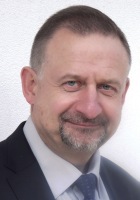 Full Professor,
Head of the Multimedia Systems Department
Wikipedia web page (in Polish)
Wersja polska / Polish version
Prof. Andrzej Czyżewski is one of Poland's leading scientists in electronics, acoustics, multimedia, and artificial intelligence. His more than 40 years of scientific, teaching, organizational, and implementation activities have had a significant impact on the development of the technical sciences in Poland and have also contributed to strengthening the position of Polish science in the European research and innovation space.
The professor is the author or co-author of nearly 600 scientific publications, including over 150 articles in prestigious international journals. His work covers a wide range of topics, from sound engineering and multimedia technologies, through intelligent transport systems and speech processing, to the application of artificial intelligence in medicine, diagnostics, and public safety. In 1999, he was awarded the title of Professor of Technical Sciences, and in 2003, he was appointed Full Professor – one of the youngest in the history of Gdańsk University of Technology. For nearly 35 years, he has headed a research and teaching team at Gdańsk University of Technology, currently known as the Department of Multimedia Systems, which brings together over 40 employees and doctoral students from the Faculty of Electronics, Telecommunications and Computer Science.
From the beginning of his scientific career, Professor Czyżewski has pursued an interdisciplinary vision of science, combining the skills of an engineer, researcher, teacher, and inventor. The essence of his work is scientific multitasking – the ability to think technically, organizationally, and strategically at the same time. His work shows a rare harmony between science and practice, theory and implementation. He naturally combines the world of ideas and technology, which makes him a true embodiment of the idea of polytechnics in the Greek sense of the word poly-techne – many skills.
He was the founder and, for about 10 years, the head of the Doctoral Program in Electronics, Telecommunications, and Computer Science, which has produced about 100 doctors of technical sciences, including 16 who obtained their doctorates under his supervision (14 dissertations were awarded honors). As a supervisor and academic advisor, he continues the best traditions of the school of sound engineering initiated in Gdańsk by Associate Professor Marianna Sankiewicz and Associate Professor Gustaw Budzyński. In this field, taking into account various issues of computer science and artificial intelligence, he has promoted approximately 350 master's and doctoral students who have completed their theses under his supervision.
Inventive and innovative achievements, projects, and implementations
The inventive achievements of Prof. Andrzej Czyżewski and his team are impressive and include over 40 national and international patent applications and 6 trademarks, of which over 30 have obtained legal protection. A significant part of them have been applied in industrial, medical, and transport practice—through direct implementation or the sale of licenses.
The professor's most important achievements include both classic electronic designs (including telephone exchanges, wireless telephone connections, and fiber-optic control of a pipe organ built in the Bielsko Music House) and solutions based on artificial intelligence and neurotechnology. The devices he and his team have developed – from digital sound processors, speech correctors, medical systems for hearing screening and communication with comatose patients, to intelligent traffic control systems, intelligent lighting systems, biometric bank security systems, and technologies for predicting wind turbine damage using sound analysis and AI – have measurable social and economic significance.
He has led research teams in over 30 projects, including those of the Foundation for Polish Science, the National Science Centre, the National Centre for Research and Development, and five international projects under the European Framework Programmes (FP 5-7). For example, the European PRESTOSPACE project has produced solutions in the field of cultural heritage protection – digitization and improvement of the quality of archival recordings. The PERFORM project provided solutions for the automatic, continuous diagnosis of the severity of neurological disorders. Prof. A. Czyżewski's team is addressing this issue using, among other things, advanced intelligent biometric pen technology. The AddPRIV project resulted in the implementation of an automatic abandoned baggage detection system at Linate Airport in Italy. The COPCAMS project led to the implementation of an automatic parking management solution based on intelligent image analysis. The inventions related to this project were awarded several gold medals at the Brussels Invention Fair and two gold medals at the Poznań Fair, and Prof. A. Czyżewski receiving the highest awards in the field of invention, such as the Merite de Invention Cross presented to him at the Brussels City Hall and the Gold Cross of the Association of Polish Inventors and Rationalizers (SPWiR).
His most important achievements include:
- systems supporting speech and hearing therapy used in speech therapy and audiology, implemented in Poland and Europe, as well as in several Asian countries, with the help of which hundreds of thousands of school children have been examined, and awarded the First Prize of the Prime Minister and the Minister of Health Award;
- intelligent road signs and transport systems based on artificial intelligence, awarded the title of ITS Leader, the Teraz Polska emblem, and the Siemens Scientific Award;
- biometric electronic banking technologies, awarded the Minister of Science and Higher Education Award;
- solutions in the field of neurotechnology and brain electrostimulation based on multi-electrode implants, including another Teraz Polska emblem, another First Prize of the Prime Minister and the international medical award Prix Galien (known as the Nobel Prize in medicine and pharmacy);
- numerous industrial implementations in the telecommunications, energy, transport, and medicine sectors.
In recent years, Professor Czyżewski has also developed some innovative multimedia solutions (together with his team), including an intensity acoustic probe – a device enabling selective recording and recognition of the voices of participants in hearings and meetings in real time. He is also the co-creator of the CyberEye project, which allows communication with patients in a minimally conscious state, using advanced eye tracking, artificial intelligence to analyze brain waves, and an invented aroma interface. On this basis, a certified medical product was created, subsidized by the State Fund for Rehabilitation of Disabled Persons.
He has also managed defense-related projects. Previously, this involved an acoustic communication system with training and combat aircraft pilots (in cooperation with the Air Force Academy in Dęblin). In 2024-25, he developed a solution for the Radmor plant in Gdynia to protect soldiers' hearing on the battlefield.
Of particular importance in the professor's achievements is his key role in the INDECT (Intelligent Information System Supporting Observation, Searching and Detection for Security of Citizens in Urban Environment) project, one of the most significant projects of the EU's 7th Framework Program. Professor Czyżewski was one of the inspirers of the project concept and its primary executor, leading key research tasks in multimedia, sound, and image data analysis. These solutions have been awarded, among others, the Police Gold Star.
In recent years, he has been involved in implementing artificial intelligence into proprietary solutions that enable the transcription of Polish medical speech and the automatic recording of court hearings and meetings, and he is a pioneer in solutions to improve the accuracy of language models. An example of success in this field is the Lex AI automated legal advice system, implemented as a digital product. The latest achievement in the field of artificial intelligence model development is a solution, developed under his supervision, for the automatic interpretation of auditory brainstem response test results.
Example of cooperation with other universities: AGH University of Science and Technology
Professor Andrzej Czyżewski's relationship with the AGH University of Science and Technology is long-standing, multidimensional, and deeply rooted. As early as 1992, he obtained his postdoctoral degree at AGH (in the field of vibroacoustics), which symbolically linked his subsequent scientific development to this university.
In the following years, he carried out numerous research projects in cooperation with AGH scientists, including INDECT, INSIGMA, INPREDO, and INZNAK, participated in conferences and joint scientific initiatives, and actively supported the development of AGH's scientific staff as a reviewer of doctoral and postdoctoral theses.
Of particular importance in the professor's achievements is his key role in the INDECT (Intelligent Information System Supporting Observation, Searching and Detection for Security of Citizens in Urban Environment) project, one of the most significant projects of the EU's 7th Framework Program. Professor Czyżewski was one of the inspirers of the project concept and one of its leading implementers, managing key research tasks and being responsible, among other things, for the development of methods for the analysis of multimedia data, sound and image, and their integration with public security systems. The INDECT project, carried out by an international consortium of universities and technology companies, was the first such large-scale European research and development project in the field of public safety. The results of this project, including systems for detecting threats in urban areas and automatic analysis of acoustic situations, continue to set the direction for research in the field of critical infrastructure protection and citizen safety. In earlier and later periods, he also led a team of contractors within the framework of the four other EU Framework Programs mentioned above. At AGH, he was also employed as a contractor for a high-budget POIG project within the INSIGMA (NCBR) project.
He managed the implemented POIR INZNAK project – Intelligent road signs for adaptive traffic control, in which the AGH team actively participated. Previously, he was a key partner in the INPREDO project implemented by AGH for GDDKiA. The joint achievements of PG and AGH also include the participation of AGH teams and Prof. Czyżewski's team in the Mayday Euro 2012 project at the TASK computing center in Gdańsk.
He co-organized six editions of the MCSS (Multimedia Communications, Services and Security) international scientific conferences at AGH University, resulting in the publication of five Springer books co-authored with Prof. Andrzej Dziech.
He also worked at Cyfronet in Krakow, where he led the development of the Acoustics computing module as part of the PL-GRID2 project. He continues to perform scientific calculations there to this day, and one of the results of this collaboration is an article published in Scientific Data (2025) with dual affiliation: Gdańsk University of Technology and Cyfronet AGH.
Importantly, Prof. Czyżewski has significantly supported the development of AGH's scientific staff by serving as a reviewer of doctoral theses and habilitation applications by the University's employees, which attests to the recognition of his competence and authority within the Kraków academic community.
His long-term cooperation with AGH teams is not only project-related, but also symbolic – it combines the tradition of the Krakow school of technical sciences with the Gdańsk school of multimedia and artificial intelligence, creating a common space for innovation in the field of sound, security, and technologies oriented explicitly towards serving people.
Impact on the economy and society
The professor's achievements are not only of fundamental scientific importance but also of significant social importance. His solutions are used in industrial, medical, educational, administrative, and financial practices, contributing to improvements in citizens' quality of life, public safety, and economic efficiency.
His work in acoustics and speech has led to breakthroughs in the treatment of stuttering, hearing and communication disorders, and devices developed by his team, such as CyberEye, have opened up new possibilities for communicating with comatose patients. As a researcher and designer, he is guided by the belief that technology should serve people, and that every innovation must have an ethical and social dimension. This has been recognized, among others, by Polish TV (TVP1) viewers, who voted him Inventor of the Year 2013.
The professor is also an active popularizer of science, a promoter of young talent, and an initiator of projects that connect the worlds of science and industry. For years, he has co-organized competitions for technical youth, supported secondary schools and educational initiatives (including the nationwide Primus Inter Pares competition), and served on the boards of various organizations.
His achievements have been recognized many times. For about 30 years, he has received the First Prize from the Rector of Gdańsk University of Technology each year, and in 2020 he was awarded the title of the first Personality of Gdańsk University of Technology. He is a winner of the Scientific Award of the City of Gdańsk (known as the Gdańsk Nobel Prize). His achievements have been recognized twice with the Prime Minister's Award, the Siemens Scientific Award, the title of Leader of Intelligent Transport Systems and Leader of Teleinformatics, the PARP/NCBR Polish Product of the Future award, and twice with the Teraz Polska emblem.
The Audio Engineering Society honored him as a Fellow. He is also a senior member of the Rough Set Society (for his work in soft computing), the European Association of Biometrics (for his cooperation with the banking sector on biometric authentication), and a member of the Acoustical Society of America and the IEEE.
His numerous practical achievements were driven by the need to solve a large number of difficult-to-estimate scientific problems. His success in this field is evidenced by his large number of publications, which have kept his name on Stanford University's list of the 2% most influential scientists in the world for many years.
He has been awarded the Gold Cross of Merit and the Knight's Cross and Officer's Cross of the >em>Order of Polonia Restituta.